My Role
Principal designer, from research to scale
I was the principal designer end-to-end—research planning, in-store visits and interviews, service design workshops, pilot strategy, and close collaboration with marketing on kiosk signage and tablet motion.
The Challenge
Rebranding stores daily—without the tools to help
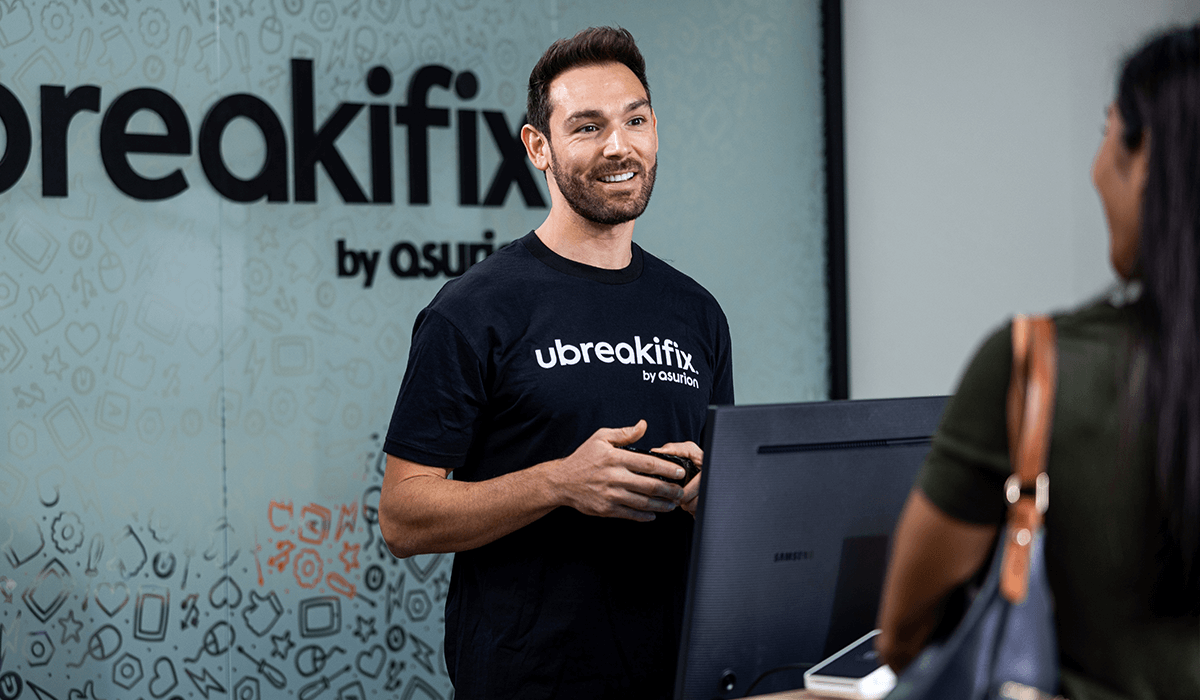
In 2019, Asurion began rebranding uBreakiFix locations to Asurion-branded stores. As the rebrand rolled out, customers began walking in expecting help with their insurance claims—but stores weren't equipped to assist. Regulatory constraints meant employees couldn't file claims on customers' behalf (they aren't licensed insurance adjusters), and store systems didn't connect to Asurion's claims platform.
These pain points surfaced through a combination of in-store visits, technician interviews, and direct feedback from store owners—making it clear the gap between brand promise and in-store reality was widening fast.
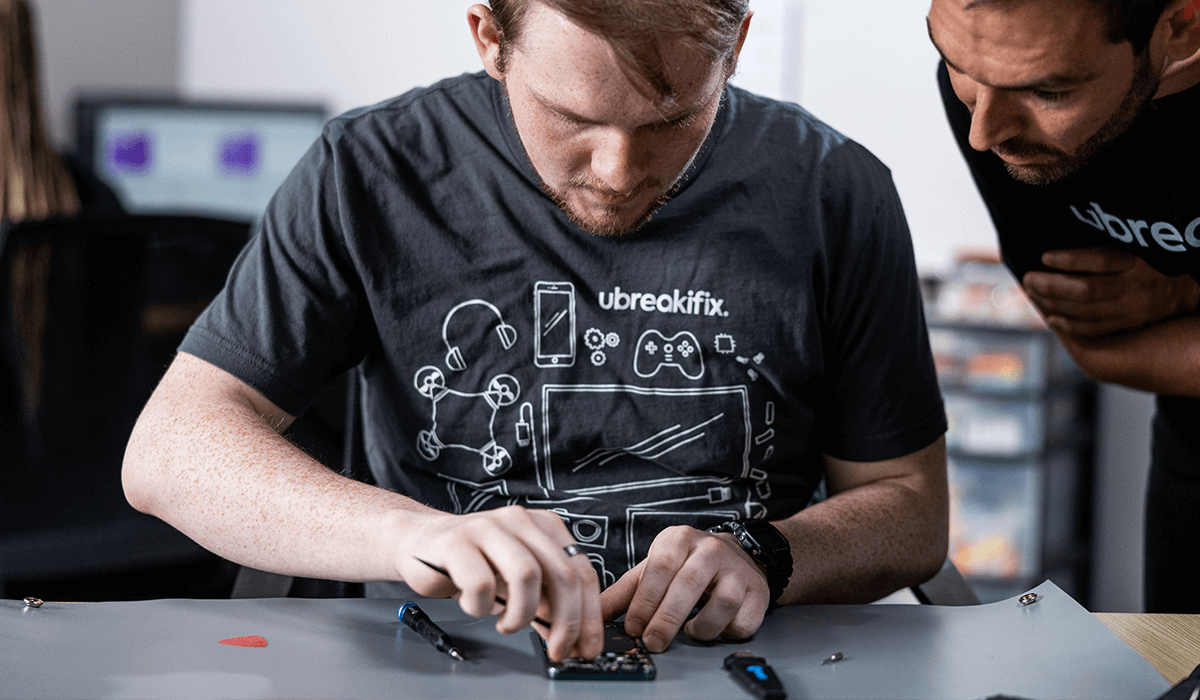
Store technicians were spending up to 45 minutes trying to help customers resolve claim issues—time they couldn't afford with staffing constraints and increased non-repair responsibilities. The result? Frustrated customers, overwhelmed technicians, and a growing gap between brand promise and reality.
You need to call Asurion, your carrier, or go to phoneclaim.com
This was the only answer technicians could give—even though customers were standing right in front of them, in an Asurion store, expecting help. The disconnect between brand promise and operational reality was creating friction at every touchpoint.
The Approach
Service blueprints to align stakeholders at odds
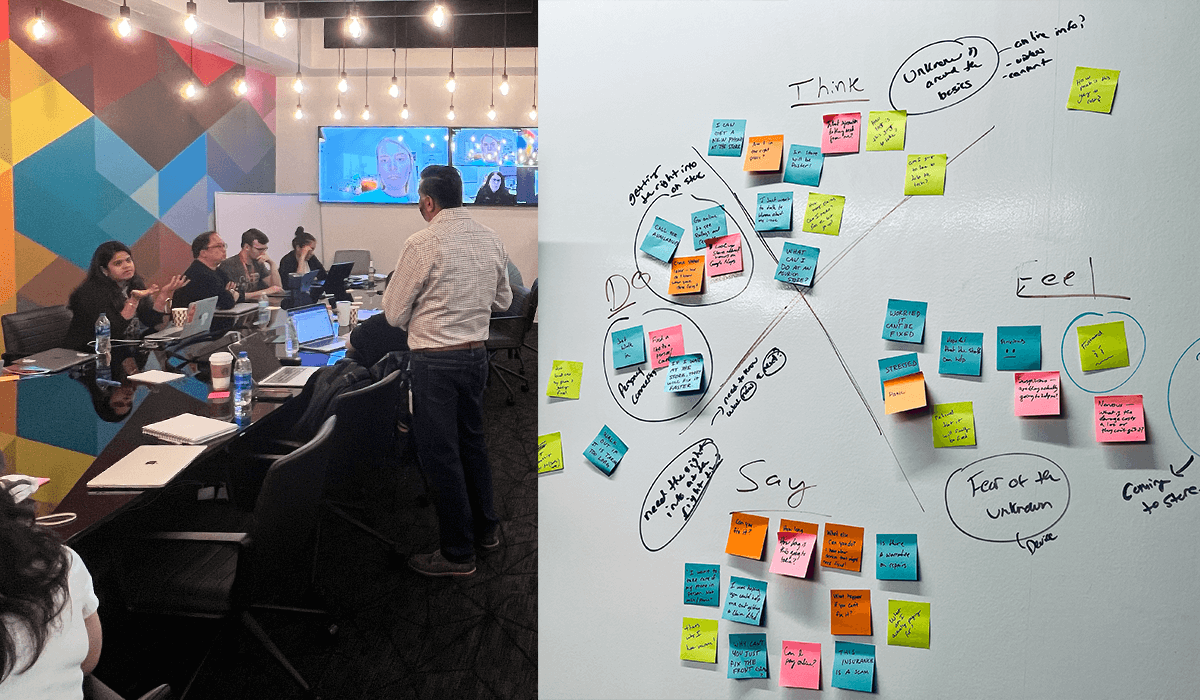
We started by mapping the service experience with store employees, operations, and the claims product team using service blueprints. A current-state blueprint diagnosed where the journey broke down—surfacing pain points and compliance gaps so every stakeholder saw the same facts. A future-state blueprint then described the target experience we wanted to design toward, giving us a shared reference to evaluate concepts and handoff moments.
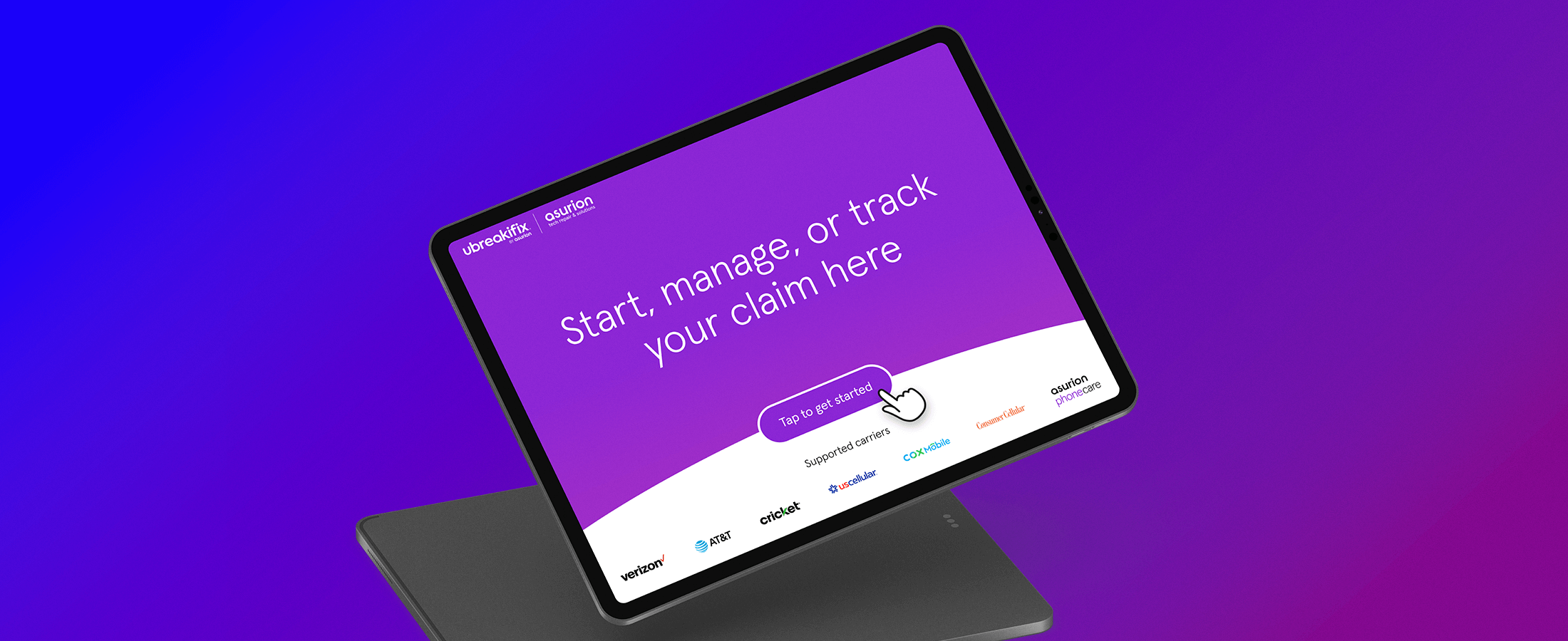
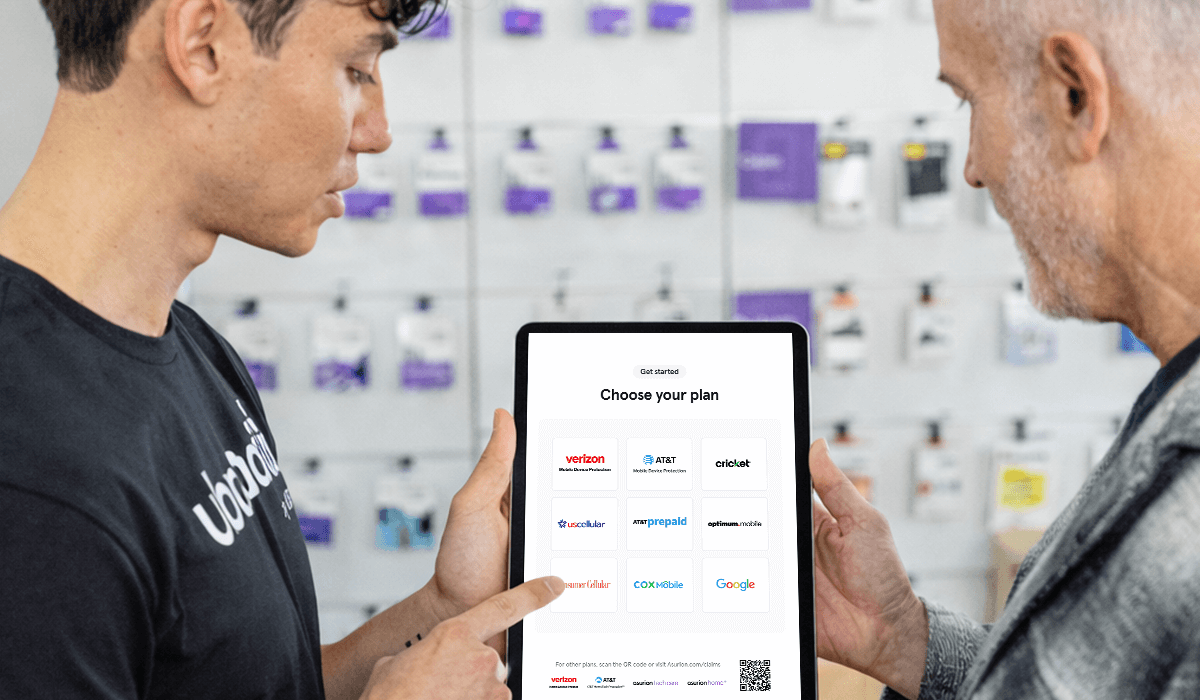
The ideal experience we identified: give customers an easy way to file and manage claims without compliance issues by warmly handing them off to an in-store tablet for self-service.
The Solution
Knowledge is power, confidence is key
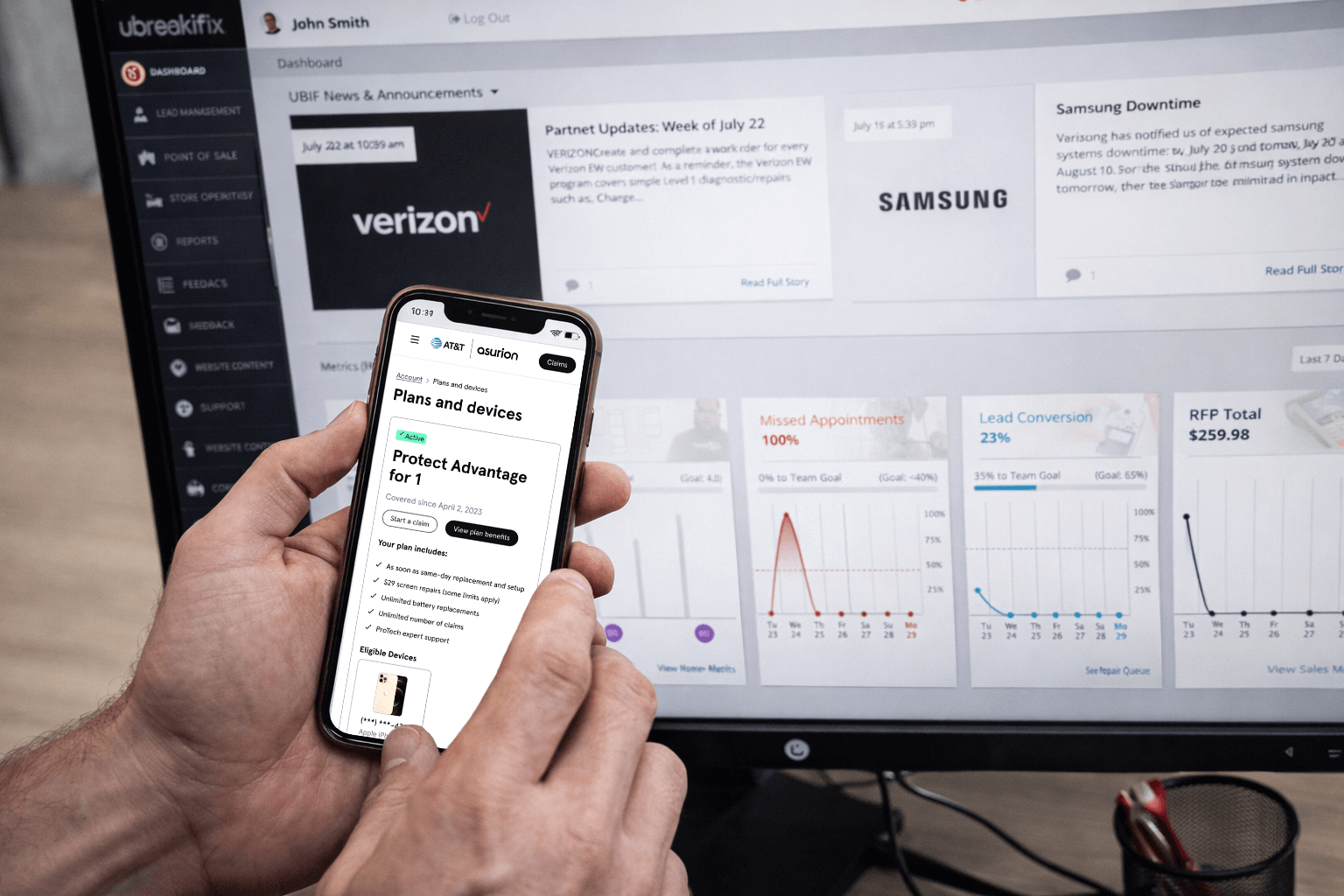
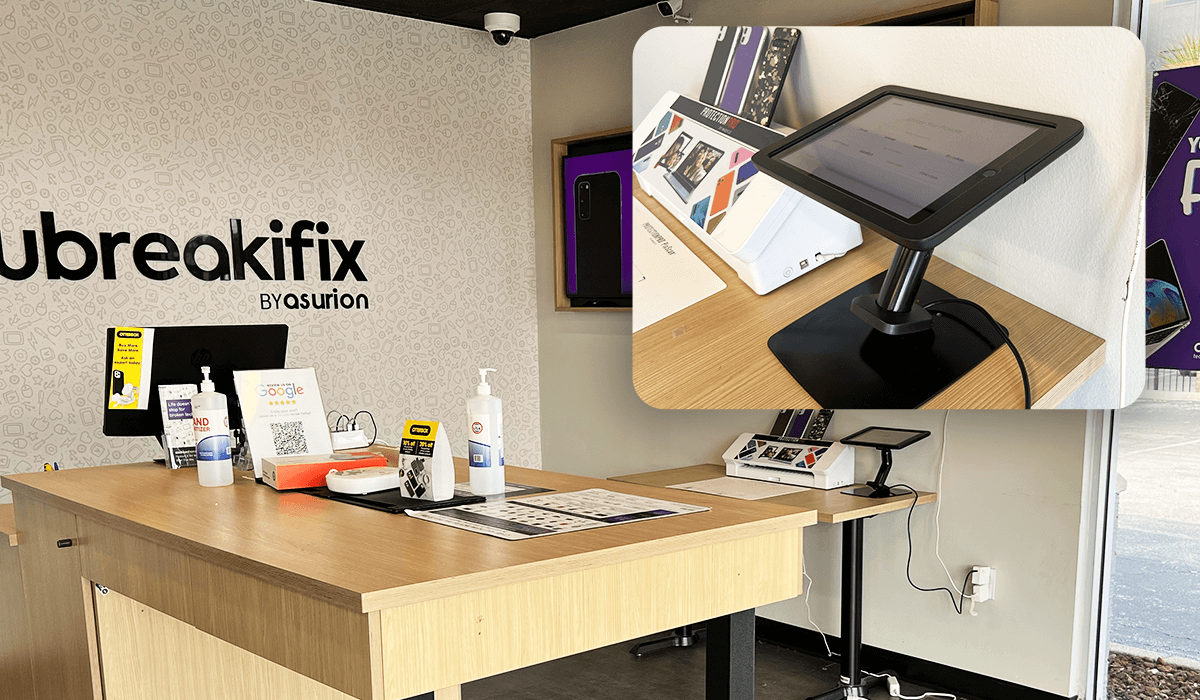
We designed a solution that empowers both technicians and customers. The in-store technician can now quickly identify if a customer has a protection plan and guide them to file or resume a claim on the tablet. The customer gets knowledgeable feedback on what's wrong with their device—helping them file claims correctly the first time.
Filing claims in-store needed to be tailored to customers already at a store. We removed unnecessary steps like location selection (it defaults to the current store) and simplified identity verification since the customer is present. The result: claim resolution in under 10 minutes, down from 45.
My Role
Principal designer, from research to scale
I was the principal designer on this project, collaborating with the Director of User Research to craft the research plan and conducting store interviews with customers and technicians firsthand. I partnered with the marketing design team on kiosk signage and the tablet animation, and led service design workshop sessions that aligned stakeholders across operations, stores, and product.
Principal Designer
Service Design
User Research
Workshop Facilitation
Motion Design Collaboration
Pilot Strategy
Impact
From 45 minutes to under 10
Built collaboratively through co-creation workshops, store pilots, and feedback sessions—the solution aligned product and operations on success metrics and scaled to all corporate stores.
<10 min
Claim resolution time (down from 45 mins)
10K+
Customers helped per month
$100K+
Saved in call/chat deflection
Reflection
What I learned
Co-creation workshops, store pilots, and continuous feedback sessions were the key to this project's success. We aligned stakeholders who were initially at odds by building service blueprints together—when everyone sees the same map of the problem, solutions emerge collaboratively and buy-in comes naturally.
This project reinforced that the best solutions come from involving frontline employees in the design process. The experts who face these problems daily had insights that no amount of desk research could uncover.